The Psychological Science of Injury Rehabilitation: A Surgeon's Insights
When I first rubbed in as a young orthopedic trauma surgeon, I believed recovery suggested bones knitting and injuries shutting. Years in the operating space and clinic moved that view. The most effective fixings I have seen were not just layers seated flush versus cortical bone or tendons sutured end to end, they were individuals reclaiming agency after all-time low fell out. Recovering work on 2 tracks, physical and psychological, and if you ignore either, the patient stalls. The scar tissue you can't see often dictates the outcome greater than the crack line you can.
Surgeons often tend to be optimists about cells. We know the biology and the timelines. Tibial shafts unite in about 12 to 20 weeks, offered blood flow is undamaged and the client does not smoke or overload too early. Nerves regrow about a millimeter a day under the right problems. But the mind has its very own timetable and hazards, and those are less foreseeable. I have actually watched a young rider that shattered his pelvis go back to high-level biking in 8 months, while a middle-aged teacher with a straightforward wrist crack struggled to drive on the highway a year later on. The difference was not in their X-rays. It remained in exactly how their nervous systems processed hazard, loss, and uncertainty.
The moment everything changes
Trauma divides life right into an in the past and after. The event itself imprints. Patients describe pictures rather than a story, the preference of blood, a control panel fracturing, a headgear visor fogging, the silence after an impact. In the intense setup, we take care of airway, breathing, circulation, special needs, exposure. The mind likewise triages: it shields by tightening focus and, sometimes, by dissociating. Households often translate that early tranquility as durability. Occasionally it is. Occasionally it is the nerves going offline to survive.
The hours and days that follow are a blur of scans, analgesia, permission forms, and alarm systems. People consent to significant choices while sleep-deprived and anxious. This is where tone matters. Clients remember words spoken in ICU rooms. If I state, "You will certainly never stroll normally once again," it lands like a decision. If I claim, "Your knee has taken a major hit. We will certainly stabilize it today and build toughness over months. The majority of people with this injury walk with little or no limp by one year if they do the work," it acknowledges seriousness while leaving the door open.
I found out to anchor patients with 3 sentences at the bedside after the preliminary surgical treatment. Initially, I clarify the injury in clear terms and show them their photos. Second, we detail what the next 24 to 48 hours resemble, due to the fact that short perspectives calm a stormed mind. Third, I name a specific, achievable action they can take currently, like "Rest up for 5 minutes twice today," or "Technique inhaling to the top of your lungs ten times each hour." That little lever returns a bit of control.
Pain as an instructor and a trap
Pain monitoring in trauma is both science and arrangement. Undertreat and you invite central sensitization, inadequate rest, and evasion. Overtreat and you risk delirium, bowel irregularity, drops, and dependency. The appropriate strategy advances. In the initial week, I usually advise a blend: scheduled acetaminophen, an anti-inflammatory when risk-free for bone recovery, and brief courses of opioids with clear endpoints. By week two, we taper opioids and lean on activity, warm or ice, and targeted neuropathic agents if there is nerve involvement.
Here is the part that sparks debate in the break space: the story we tell about pain matters. People often ask, "Does pain suggest I'm harming it?" Occasionally yes, commonly no. Harm pain really feels sharp, rising, and relentless, particularly with specific movements that stress a repair. Stiffness discomfort tends to be boring, improves with mild activity, and retreats when you stop. If a patient with a repaired distal span prevents making a fist because the initial two reps hurt, they can wind up with bonds that restrict function for months. If an individual with a meniscal repair bows beyond the cosmetic surgeon's orders because it only harms a little, they can shear a healing surface area. The job is to show discernment, not fearlessness.
Dark evenings are common during the very first 2 weeks. Pain comes to a head at odd hours when the ward quiets and visitors go home. I warn about the 2 a.m. spiral because understanding it is coming can blunt its strike. If you wake and choose your life as you understood it is over, you are in great business, and you are likewise not a prophet. Fatigue exists. The following morning looks different.
The first crack of identity
Serious injury cracks open identification. The building and construction worker whose back takes in an autumn can no more lift his kid. The runner hears her pulse in a cast and feels old at 29. A farmer's callused hands rest on a medical facility covering, and his job ethic ram immobilization orders. After that there is the athlete whose resources depends on a joint that now squeaks and waits. That is not vanity, that is loss of self.
I as soon as treated a violinist with a comminuted left ulna crack after a bicycle crash. Technically, it was regular. We layered the bone, examined ligament moving, and her very early recuperation was on track. Three weeks in, her treatment keeps in mind soured. She avoided making use of the hand and tensed when the bow came near it. She had headaches regarding grinding bone. Her doctor traumatólogo can have prescribed more hand therapy, however that would have misreaded. We generated a psychologist with performing arts experience. They worked on rated images initially: seeing herself playing, hearing the item, really feeling fingertips on strings without pressure. Only later did she touch the bow. She returned to the stage in 9 months, not because we innovated in the operating space, yet due to the fact that we recognized the mind's practice session is as real as the body's.
Identity repair takes practice. We ask people to tell the tale of what happened in numerous variations: the realities for an insurance company, the emotions for a liked one, the strict sensory details for a therapist, the short two-sentence variation for a complete stranger. Each variation develops adaptability. Stressful memory is sticky when it resides in one taken care of manuscript. Informing it and relocating your body at the very same time re-shapes quicker. That is why strolling in the corridor while mentioning the accident sometimes brings even more relief than speaking alone in a chair.
The family system belongs to the patient
Families and partners hold the home field after discharge, and they can either speed up or unintentionally slow healing. Overprotection, born from love, feeds worry. A spouse who rushes to bring every glass of water can show the recovering individual that they are fragile. On the other side, pressure to "condition" can weaken trust and drive evasion underground. I set expectations clearly in the health center area, due to the fact that waiting till the very first clinic browse through can be as well late.
We talk about functions for the first 2 weeks, regarding rest plans that avoid stairs if required, regarding car transfers and shower safety, and we make a note of a few phrases that are enabled during challenging moments. Phrases like "Allow's try the prepare for 5 minutes and then reassess," or "Your leg is secure within the support, the experience of pulling is anticipated," assistance steer feeling back toward activity. I alert against catastrophizing aloud. If a teenager hears her mother whisper, "She will certainly never dance once more," at the bedside, you might also stamp it into her bone.
Fear of re-injury and the slippery slope to avoidance
Fear is not irrational in injury recovery. Individuals have actually found out, with pain and memory, that danger exists. The problem is range. After an anterior shoulder dislocation, everyday motions like getting a seatbelt can really feel threatening. Numerous people armor themselves by relocating much less. They support, clench, and shrink their arcs. Avoidance eases concern in the minute and deepens it over weeks as toughness drops and stiffness rises.
One snowboarder I dealt with had reoccurring ankle sprains and a final dislocation that required surgical procedure. He went back to gym work quickly, but each time he thought about the mountain, he felt his heart race and his calves constrain. He urged he required one more month to "obtain strong." Three months later he was stronger and no closer to snow. We set up direct exposure like we set up collections and reps. First, he viewed runs at the hotel on video while standing in his boots at home. Next, he strolled in boots on flat ground. After that we stood at the base of the mountain for an hour without riding. It looked absurd to various other skiers, but it was intentional. He took his very first sluggish rabbit incline 4 weeks after that. He dropped two times. He involved clinic with a grin that scared his mother and relieved me.
Graded direct exposure works since the nerves discovers safety and security in context. Mental rehearsal assists, but you ultimately have to step back right into the sector. We incorporate exposure with physical prep work that values cells. The order issues: steady prior to vibrant, predictable prior to disorderly, controlled atmosphere before competitors. I still recall a late-season soccer return where we had the professional athlete do 300 minutes of unforeseeable heading drills in technique prior to his very first match to confirm genuine self-confidence. Numbers provide people something to push against.
Depression, anxiety, and post-traumatic stress in the clinic
The literary works reveals raised rates of anxiety and stress and anxiety after significant musculoskeletal trauma, with significant symptoms in about 20 to 40 percent of people in the very first year depending on injury seriousness and social support. Post-traumatic stress and anxiety can show up even in those that were not in mortal threat. If you really felt defenseless while your body was at threat, your mind took notes.
The problem is not simply diagnosis, it is detection. Many medical facilities are not established up for extensive psychological health and wellness screening, and stigma maintains several people silent. I maintain two quick sign in mind. If rest stays fractured past the acute pain window, if the startle reaction persists, if an individual stays clear of pointers of the mishap to the point that it constricts their globe, or if they feel numb and separated instead of merely cautious, I refer early. There is no badge for white-knuckling alone.
Cognitive behavioral therapy and trauma-focused therapies like EMDR can fit alongside physical treatment without competing for time. The very best end results I have actually seen occur when the specialist and the physiotherapist share notes. If the psychologist recognizes that Tuesday's session includes stair training, they can deal with awaiting stress and anxiety on Monday. When the physiotherapist becomes aware of a recall triggered by a corridor odor, they can adjust the atmosphere. Assimilation defeats silos.
The healthcare facility manuscript and the work of language
Words become part of the toolkit. Our team spent weeks revising our supply phrases when we understood just how much damages a thoughtless sentence can cause. As opposed to "Do not drop," which plants a dazzling photo and pairs it with a command, we state "Maintain your feet under you and your eyes on the step." As opposed to "This might hurt," which spikes risk, we claim "You will certainly feel stress and heat for a few secs, then it will pass." Instead of "You'll be back to normal," which sets up a debate versus fact, we claim "You'll develop a new normal that includes what you value."
I when captured myself informing an individual, "We require to get you walking by Friday." It sounded motivational. He listened to blame. He attempted to conceal his wooziness and virtually collapsed in the corridor. We had actually missed out on orthostatic hypotension caused by blood loss. Accuracy is not simply respectful, it is safe.
Setbacks are not verdicts
Nearly every healing has an action backward. Wounds open. Swelling rebounds when somebody presses as well quickly. A household emergency sidetracks an individual during an essential stage of rehab. The very first instinct after an obstacle is frequently shame or anguish. I attempt to normalize the slope. If you zoom out, most progress graphs look rugged however typically rising. I maintain trays of old postoperative radiographs in the center for teaching, not just for self-praise. When patients see that also pretty X-rays come from people that had problem with series of motion or wounding that lasted longer than anticipated, they really feel much less alone.
One building and construction supervisor in his fifties fractured his calcaneus. This is a harsh injury since it punishes both remainder and activity. Rest too long and the subtalar joint stiffens, walk too early and the heel swells like a balloon. At week 8 he led routine and proud. At week ten he overdid backyard work, swelled, and might not fit into his boot. He took that as failing. We reframed the episode as data: his heel told us its threshold. We pulled back for a week, utilized compression and elevation like medicine, after that advanced once more, slower. He returned to website work at five months, not 3, however he remained there.
The function of society and language
Healing happens in a social structure. What makes up strength in one family may look like stubbornness in another. Some communities approve emotional assistance without blinking. Others read it as weakness or an indication that the surgeon assumes the injury is "all in your head." If you speak across languages, subtlety multiplies. Where I practice, I commonly satisfy Spanish-speaking individuals who refer to their orthopedic specialist as a surgeon traumatólogo. The phrase breaks down surgical procedure and injury into one identity in such a way that English does not. I like it. It acknowledges that cutting is the last option and that the area stays in the mayhem of accidents.
Language choices change expectations. In English, "rehabilitation" can appear institutional. In Spanish, "rehabilitación" often brings much less governmental weight. I have learned to ask clients how they call what happened, "accident," "injury," "assault," "fall," and then mirror their term unless it distorts clinical clearness. That tiny respect decreases defenses. When emotion is high, people hear tone greater than content. A constant voice and ordinary words beat jargon.
Return to function, sport, et cetera of your life
The side between readiness and risk is where judgment lives. Companies desire dates. Trainers desire timelines. People want assurance. Biology gives varieties instead. For a tibial plateau crack with secure addiction, I start weight bearing somewhere in between six and twelve weeks depending on crack pattern, bone quality, https://robertwhitesthelena.com/ and placement. Full return to rotating sport can land anywhere from six months to a year. I supply varieties early, then tighten them as we see the individual, not just the injury, move.
We build return-to-play or return-to-duty plans in stages that respect both tissue and psychology. Phase one has a tendency to be about swelling control, range of motion, and mild strength. Phase two layers in balance, endurance, and speed. Phase three presents unpredictability and sport-specific drills. Phase four is get in touch with, competition, or work simulation under supervision. If worry spikes in stage three, it is not a character imperfection, it is a sign to spend more time there. Avoiding the "disorder" phase is how individuals reinjure. It is insufficient to be strong in a straight line. You have to be solid in a storm.
Sleep, nourishment, and alcohol usage are not second thoughts. Distressed bodies frequently long for sedation and incentive. Alcohol and cannabis might reduce the side in the short term and impair sleep design in the long term. Healthy protein consumption throughout early healing is frequently inadequate, especially in older adults. I offer people numbers they can work with: about 1.2 to 1.6 grams of healthy protein per kilo of body weight each day throughout the first six weeks, split across dishes, with interest to leucine-rich sources. I ask about iron status in those with significant blood loss. I caution lifters that wish to "maintain their gains" not to compromise recovery for biceps.
The silent injuries: concussions and ethical wounds
Not all trauma is visible on an X-ray. Traumas go along with numerous cracks with systems that barely register in the minute. The person that dropped from a ladder and fractured a forearm may likewise be unclear, light-sensitive, and short-tempered weeks later. Integrate that with pain medication and rest loss and you have a volatile mix. The return-to-cognition strategy deserves as much framework as return-to-run.
Then there are moral injuries. The chauffeur that caused a crash that hurt someone else. The worker that cut a corner and wounded a colleague. Embarassment complicates recovery like couple of various other forces. These people usually stay clear of care since every experience is a reminder. Calling ethical injury without judgment can open stalled progression. Healthcare is not the legal system; our work is to help individuals encounter their activities and return on a safer path.
What assists: a sensible, short checklist for patients and families
- Clarify the next 24 to 48 hours. Short horizons relax the mind. Write down the immediate strategy and a details activity you can take today.
- Name the discomfort and determine its definition. Find out the feel of damage discomfort versus tightness discomfort. Use that map to lead activity.
- Watch for evasion. If worry is reducing your globe, plan graded direct exposure like you plan exercises. Little steps count.
- Coordinate the group. Let your cosmetic surgeon, physiotherapist, and specialist speak with each other. Assimilation defeats silos.
- Protect sleep and protein. Aim for regular sleep windows and 1.2 to 1.6 grams of protein per kg daily throughout very early recovery.
What assists medical professionals: habits that alter outcomes
- Speak in ranges, not certainties, and set seriousness with company. Leave the door open without decreasing the injury.
- Normalize obstacles early. Show instances from similar situations so patients expect the incline to zigzag.
- Screen simply and refer early for depression, stress and anxiety, and post-traumatic tension. Work together with psychological health professionals.
- Align exposure with cells timelines. Construct "chaos" training right into return-to-play or work plans.
- Mind your language. Replace threat-laden expressions with accurate, workable guidance.
The long tail and the 2nd story
A year after a negative injury, when cracks have actually unified and scars soften, numerous people believe they must really feel grateful and completed. If they do not, they really feel guilty. The lengthy tail of healing includes wedding anniversaries of the event, sudden waves of memory, and new arrangements with a body that creaks in a different way in cold weather. I inform individuals they are creating a 2nd tale of themselves. The first tale was interrupted, not erased. The second story consists of chapters on patience, on assistance given and gotten, on anxiety faced in small spaces, on the wonder of stairs.
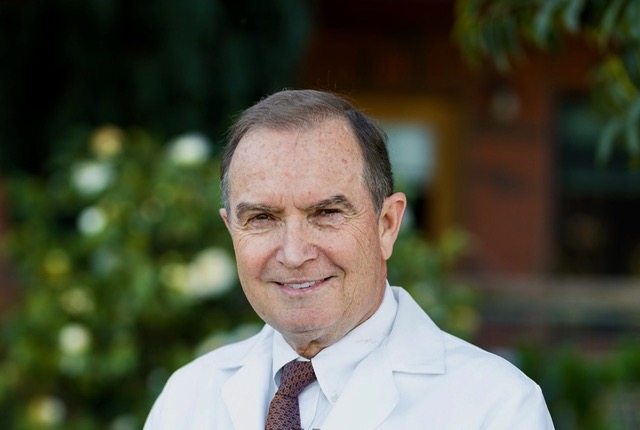
I keep a note from a patient taped inside a cabinet over our facility sink. He fell two tales while taking care of a seamless gutter, fractured both calcanei, and invested a year in rehabilitation. The note is short. "I disliked you the day you made me stand. I enjoyed you the day you allow me sit on the flooring to play blocks with my kid without a timer. Very same lesson both days. Thank you." It reminds me that our job is not to save individuals from discomfort, it is to guide them toward the kind that heals.
As a doctor traumatólogo, I cut when necessary, repair what I can, and safeguard what biology will silently weaved back together. The remainder is coaching, listening, and readjusting program. Bones show. Minds teach extra. The psychology of injury recuperation is not a soft add-on to hard scientific research; it is a lane we neglect at our patients' peril. When we address both, we do not simply discharge patients recovered. We send out people back right into their lives with a tougher sense of self, which is the truest repair I know.